In an era where the internet’s carbon footprint rivals that of the aviation industry, the way we build for the web has shifted. It’s no longer just about aesthetics or raw speed; it’s about digital ecology.
Building a sustainable website is a challenge for the modern creator. It requires a shift in mindset, proving that high-end engineering and bold creativity aren’t just compatible—they are the two pillars of a cleaner, more accessible internet.
Why Do Website Speed and Sustainability Matter?
Every kilobyte of data transferred requires electricity. When a website is bloated, it forces processors to work harder, draining battery life and increasing emissions.
By optimizing for speed this website has a 93% mobile performance, we also optimize for AEO (Answer Engine Optimization). Modern AI crawlers and answer engines prioritize “clean” sites. Because this site is built with a lean architecture, AI models can be parsed almost instantly, making it more “discoverable”.
How JS Observers and GSAP Batching Reduce Energy Consumption ?
Animations are often the biggest culprits of CPU drain. To counter this, we implemented the Intersection Observer API, which “detects” when an element is on screen. If you switch tabs or scroll past a section, the animation pauses, drastically reducing energy usage.
For example, we use this code to stop the marquee effect of the front page :
const observer = new IntersectionObserver(entries => {
entries.forEach(entry => {
isVisible = entry.isIntersecting;
if (isVisible && !rafId) startMarquee();
if (!isVisible && rafId) stopMarquee();
});
}, { threshold: 0.1 });
observer.observe(marqueeContainer);
To further optimize rendering, we used GSAP Batching to group interactions together, ensuring a smooth experience without overheating the user’s hardware.
Why WebP and Perceptual Compression are Best for Sustainable Design ?
Images make up the bulk of a page’s weight. Our strategy involved converting all assets to WebP format for superior compression. Every image then underwent a manual perceptual check: we compressed files to their absolute limit—stopping just before the human eye could detect a difference. This saved significant megabytes while maintaining a premium visual experience. By doing so, we reduce the weight of the front page to 0.334Mo.
How Tailwind, Vite, and System Fonts Eliminate Code Bloat ?
To keep the site lean, we used Tailwind CSS and Vite to “purge” thousands of lines of unused code, resulting in a tiny stylesheet.
Instead of forcing around 200kb font download, we utilized system fonts. This strategic choice “bought” us a performance budget that we reinvested into high-quality imagery, ensuring the site feels premium without the technical overhead. To prevent the design from looking “standard,” we also leaned into unique CSS clip-path shapes. Clip-paths allow us to create unique shapes using pure code rather than heavy transparent PNGs or complex SVGs.
The Result: A Greener Digital Footprint
Building this way isn’t about compromise; it’s about intentionality. It’s the realization that a website can be have a carefully thought design, while remaining a responsible citizen of the physical world.
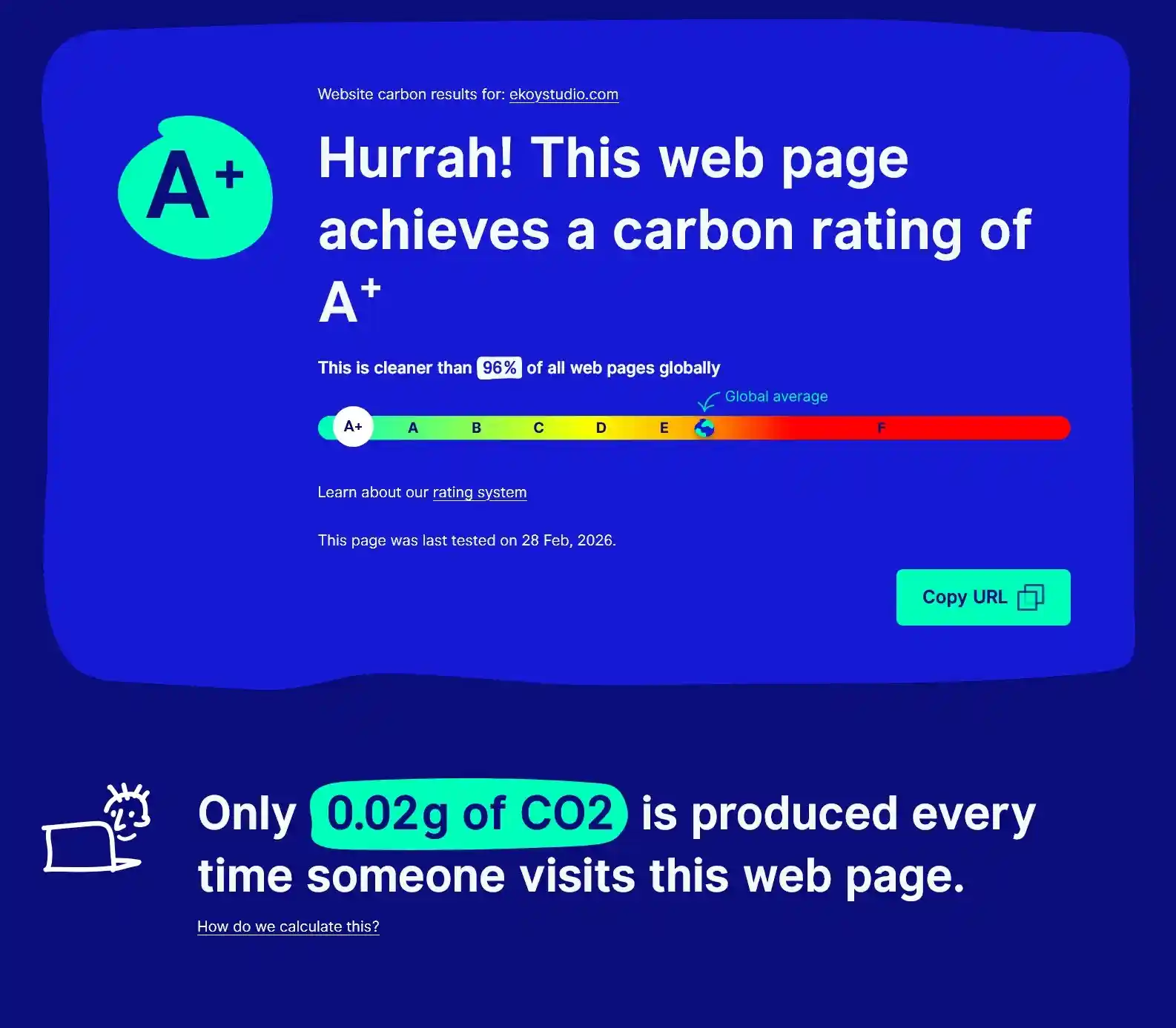
Report data :
website carbon footprint report
Our Beacon Score